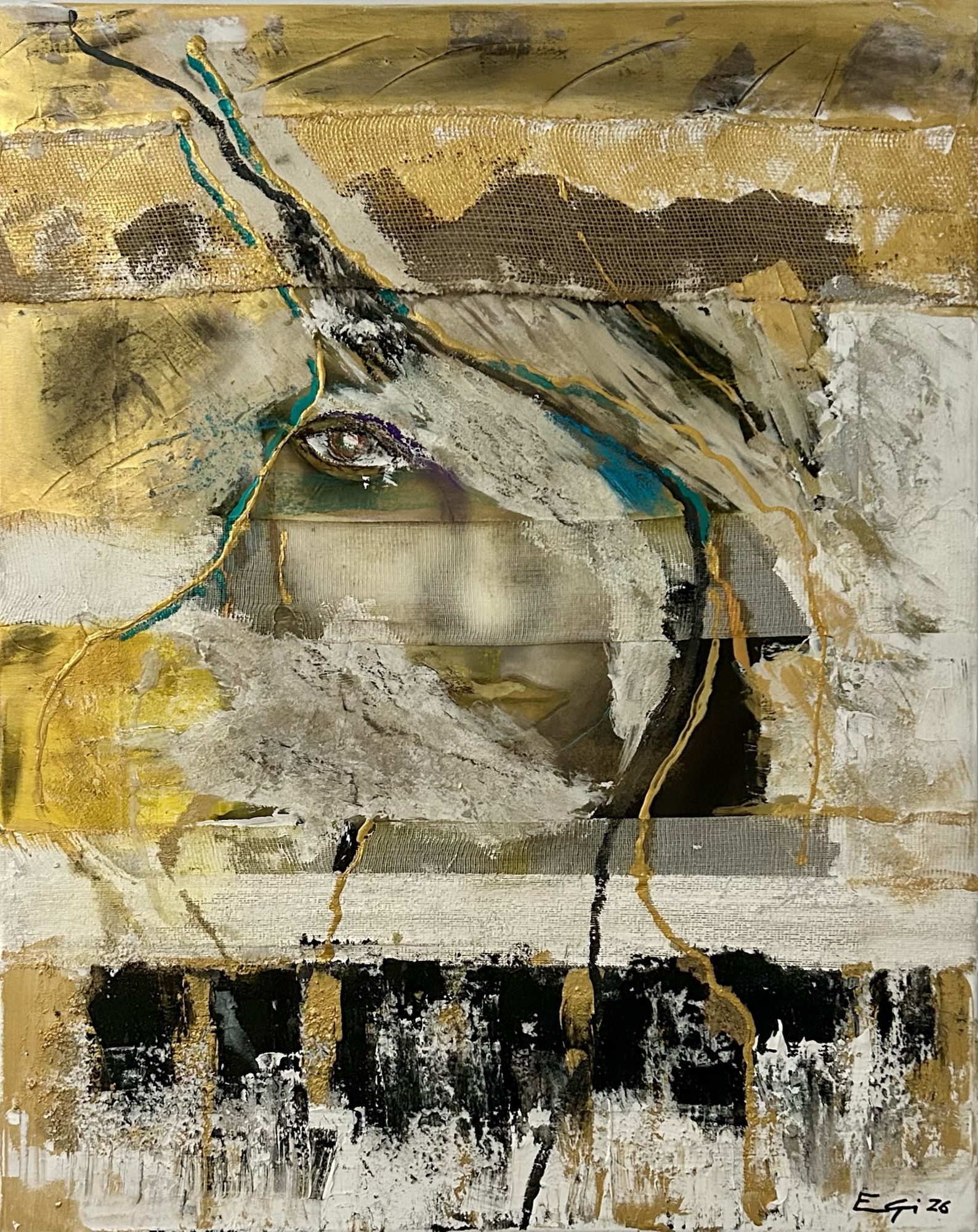
When choosing original artwork, you may come across many different artistic techniques and styles. Two broad approaches that often create very different visual experiences are mixed media art and traditional painting.
Traditional painting generally focuses on paint as the primary medium, while mixed media artwork combines two or more materials or artistic mediums within the same work.
The difference goes beyond the number of materials used. It can affect the artwork’s texture, surface, appearance, creative process, and the way a viewer experiences the finished piece.
Understanding these differences can help collectors and art lovers decide what type of original artwork connects best with their personal taste and space.
What Is Traditional Painting?
Traditional painting is generally created using a primary painting medium applied to a surface such as canvas, wood, or paper.
Common painting mediums include:
- Oil paint
- Acrylic paint
- Watercolour
- Gouache
- Tempera
The artist can create depth, movement, contrast, and emotion through colour, brushwork, composition, and layering within the chosen medium.
Traditional painting can range from highly realistic works to abstract compositions, depending on the artist’s approach.
The defining characteristic is that painting remains the main medium used to create the artwork.
What Is Mixed Media Art?
Mixed media art combines two or more different artistic materials or mediums in one artwork.
Instead of relying on one primary medium, the artist can build a surface using different materials to create additional layers, textures, and visual effects.
Mixed media artworks may include combinations such as:
- Paint and graphite
- Plaster and pigment
- Clay and resin
- Paper and paint
- Natural materials and paint
- Gold leaf and other mediums
- Recycled materials and mixed surfaces
The materials selected depend on the artist’s creative process and the ideas being explored.
What Is the Main Difference Between Mixed Media and Traditional Painting?
The simplest difference is the role of materials.
In traditional painting, one primary painting medium generally forms the foundation of the artwork.
In mixed media art, multiple materials become part of the artwork’s construction.
This can create a more physically layered surface and introduce qualities that may not be possible through paint alone.
However, mixed media is not necessarily about using as many materials as possible. The materials should have a purpose within the artwork and support the artist’s creative intention.
How Does Texture Differ?
Texture is one of the most noticeable differences between many mixed media artworks and traditional paintings.
Traditional painting can create the appearance of texture through brushwork, paint thickness, and technique. Some paintings can also have highly tactile surfaces.
Mixed media artwork can introduce additional physical textures through materials such as plaster, stone, clay, paper, resin, or other elements.
These materials can create raised areas, rough surfaces, layers, and variations across the artwork.
Light can interact with these surfaces, producing shadows and highlights that change depending on the viewing angle and lighting conditions.
Why Do Artists Use Different Materials?
Artists may use different materials for many reasons.
A material can contribute to:
- Texture
- Colour
- Contrast
- Depth
- Symbolism
- Structure
- Surface movement
- Conceptual meaning
The choice of material can therefore become part of the artistic language.
At Sublimateria, Elisabetta Galli works with materials including plaster, volcanic stone, graphite, clay, gold leaf, resin, and recycled cardboard.
Her practice explores themes connected with matter, transformation, structure, fracture, balance, and the relationship between essence and form.
The materials are therefore closely connected with the ideas behind the work rather than being used only for decorative effect.
Is Mixed Media Art More Textured Than Traditional Painting?
Not necessarily.
Traditional paintings can also have significant texture, particularly when artists use thick paint, palette knives, or other techniques.
The difference is that mixed media provides additional possibilities because the artist can introduce physical materials beyond paint.
For example, plaster can create raised surfaces, graphite can introduce a different visual quality, and natural materials can create variations that are difficult to achieve with paint alone.
Texture depends on the artist’s technique and the materials used rather than simply whether an artwork is classified as mixed media or traditional painting.
How Does the Creative Process Differ?
The creative process can vary significantly from one artist to another.
A traditional painter may build an artwork through sketches, underpainting, colour layers, brushwork, and finishing details.
A mixed media artist may follow a less linear process in which different materials are added, removed, layered, covered, or exposed during the development of the work.
This can create unexpected results.
The physical interaction between materials may influence the next stage of the artwork, allowing the surface itself to become part of the creative process.
Which One Is Better for a Home?
There is no universal answer.
The choice depends on your personal taste and the atmosphere you want to create.
Traditional paintings may suit collectors who appreciate colour, brushwork, composition, and the qualities of a particular painting medium.
Mixed media artwork may appeal to those who are drawn to texture, layered surfaces, unusual materials, and a more tactile visual experience.
The most important consideration is whether you connect with the specific artwork.
How Should You Choose Between the Two?
Rather than choosing a category first, start by looking at individual artworks.
Ask yourself:
- Do I prefer smooth or textured surfaces?
- Do I enjoy traditional paint techniques?
- Am I attracted to natural or unconventional materials?
- Do I want the artwork to have a strong tactile quality?
- Which type of surface works with my interior?
- Does the artwork have a concept that interests me?
- Do I feel a personal connection with the piece?
Your answers can help you understand which type of artwork is more appropriate for you.
Mixed Media Art and Contemporary Art
Mixed media is often used within contemporary art because it gives artists the freedom to work beyond traditional materials.
Contemporary artists may combine painting, sculpture, found objects, natural materials, photography, digital elements, and other mediums.
However, mixed media itself is a technique rather than a specific artistic movement.
An artwork can be mixed media while also being abstract, figurative, conceptual, minimalist, or connected to another artistic approach.
Originality and Physical Experience
Whether you choose traditional painting or mixed media, an original artwork gives you the opportunity to own the actual piece created by the artist.
With mixed media, the physical experience can be particularly important because the artwork may contain materials and textures that are difficult to reproduce accurately in a photograph or print.
The surface becomes something you can experience directly rather than simply observe as an image.
This physical quality can be especially appealing to collectors who want an artwork to become a distinctive part of their home.
What Should Collectors Check Before Buying?
Regardless of the artistic technique, collectors should understand what they are purchasing.
Consider checking:
Artist
Learn about the artist’s background, practice, and previous work.
Materials
Understand which materials have been used and how they contribute to the artwork.
Dimensions
Check the exact dimensions and consider how the piece will fit into your intended space.
Condition
Make sure the artwork is in the condition described by the artist or seller.
Authenticity
Ask whether the work is an original and whether documentation such as a certificate of authenticity is available.
Care
Ask how the artwork should be displayed, handled, cleaned, and preserved.
How Do You Display Mixed Media Artwork?
The display requirements depend on the materials and construction of the individual artwork.
Consider:
- Wall space
- Viewing distance
- Natural light
- Artificial lighting
- Humidity
- Artwork weight
- Hanging method
Textured surfaces can respond strongly to directional lighting. A carefully positioned light source can emphasize raised areas and create additional depth.
Avoid excessive direct sunlight unless the artist or a qualified conservator confirms that the materials are suitable for those conditions.
Explore Original Mixed Media Artwork
If you are interested in comparing different artistic techniques, looking at actual original works is one of the best ways to understand their differences.
You can explore Sublimateria’s original artworks to see how materials, texture, composition, and artistic concepts come together in individual pieces.
The physical surface can provide information that a written description or photograph cannot fully communicate.
Final Thoughts
Mixed media art and traditional painting offer different ways for artists to express ideas through materials, surfaces, colour, and composition.
Traditional painting generally focuses on a primary painting medium, while mixed media combines multiple materials within the same artwork.
Neither approach is automatically more valuable or meaningful. The right choice depends on the specific artwork, the artist’s approach, your personal taste, and how you want to experience the work in your space.
If you are choosing original art for your home, take time to look closely at the surface, understand the materials, learn about the artist, and consider the connection you have with the piece.
Ultimately, the most important artwork is the one that continues to interest you long after you first see it.
Frequently Asked Questions
What is the difference between mixed media art and traditional painting?
Traditional painting generally uses one primary painting medium, while mixed media combines two or more different materials or artistic mediums in the same artwork.
Is mixed media art a type of painting?
Mixed media can include painting, but it is broader than traditional painting because it combines multiple materials or mediums within one work.
Why do artists use mixed media?
Artists use mixed media to explore different textures, surfaces, colours, materials, and concepts that may not be possible through a single medium.
Is mixed media artwork more textured than traditional painting?
It can be, but not always. Mixed media allows artists to introduce additional physical materials that can create raised, layered, or tactile surfaces.
How should I choose between traditional painting and mixed media art?
Consider the specific artwork rather than the category alone. Look at its materials, texture, colours, concept, size, display requirements, and your personal connection with the piece.

Leave a Reply