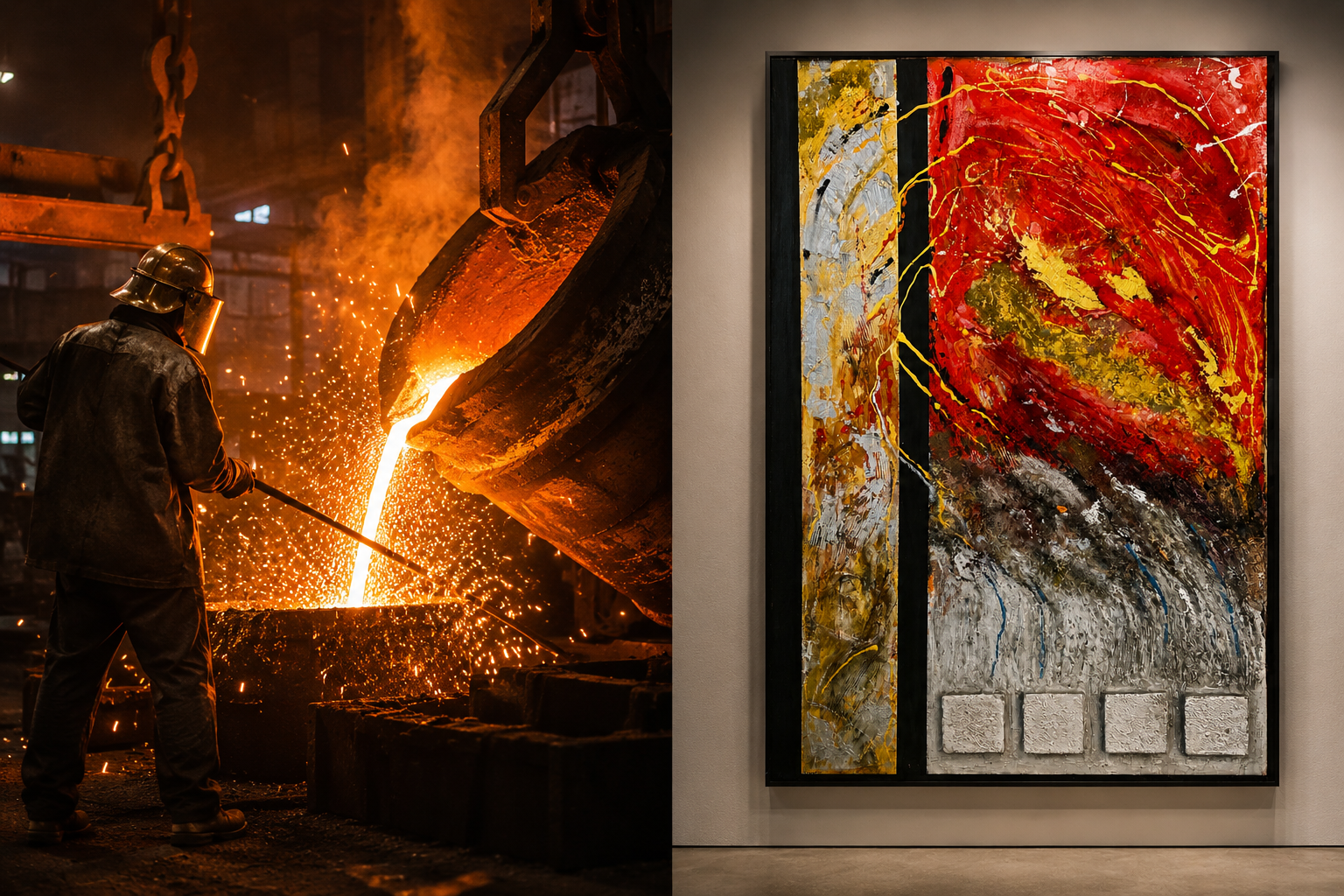
Common Materials Used in Contemporary Mixed Media Art
Contemporary mixed media art allows artists to combine different materials, textures, and techniques within a single artwork. Instead of relying on one medium, an artist can bring together materials with different physical properties to create depth, contrast, and meaning.
The materials used in mixed media art can influence how an artwork looks, feels, and responds to light. Some create smooth surfaces, while others introduce rough textures, raised layers, reflective details, or natural variations.
For collectors and art enthusiasts, understanding these materials offers a better appreciation of the creative process behind an original artwork.
What Materials Are Used in Mixed Media Art?
Mixed media artists can use a wide range of materials, depending on their artistic style and the ideas they want to explore.
Common materials include:
- Acrylic paint and pigments
- Plaster
- Graphite
- Clay
- Resin
- Gold leaf
- Paper and cardboard
- Wood
- Natural stones and minerals
- Recycled materials
Not every mixed media artwork contains all these materials. Artists select and combine them according to the intended appearance, construction, and concept of each piece.
The relationship between materials is often just as important as the materials themselves.
1. Acrylic Paint and Pigments
Paint and pigments can introduce colour, contrast, and visual movement into mixed media artwork.
Artists may apply colour in thin layers, build up the surface, or combine painted areas with other materials. Paint can also provide a visual connection between different elements of an artwork.
In mixed media compositions, colour does not always need to dominate the surface. It can work alongside texture and material variations to create balance and depth.
2. Plaster
Plaster is used by some mixed media artists to create textured surfaces and raised forms.
Depending on the technique, it can produce smooth areas, rough patches, uneven layers, or sculptural details. Its physical properties allow artists to work with the surface in ways that go beyond conventional brushwork.
Plaster can also create a strong contrast with materials such as graphite, resin, or metallic details.
Because plaster-based surfaces can be sensitive to impact and environmental conditions, the finished artwork’s construction and care requirements should be considered before display.
3. Graphite
Graphite is commonly associated with drawing, but it can also be incorporated into mixed media compositions.
It can create dark marks, fine lines, tonal contrast, and a distinctive grey or metallic-looking appearance depending on how it is applied and how light reaches the surface.
When combined with textured materials, graphite can introduce precision and visual definition alongside more irregular or organic forms.
Its role depends on the artist’s technique and the relationship between the different elements of the composition.
4. Clay
Clay offers artists another way to explore form, texture, and material presence.
It can be shaped, moulded, or incorporated into an artwork in different ways, depending on the type of clay and the construction method.
In a mixed media composition, clay may introduce an earthy appearance or a tactile quality that contrasts with smoother or more reflective materials.
Its use requires consideration of drying, stability, adhesion, and the overall structure of the finished piece.
5. Resin
Resin can create a smooth or glossy finish and may be used to encapsulate or protect certain elements, depending on the product and application.
It can also produce a visual contrast with matte materials such as plaster or cardboard.
However, resin is not suitable for every artwork or every material combination. Its behaviour depends on the formulation, application, curing process, and interaction with the other components.
Collectors should ask the artist about the specific resin used and any recommendations for display or care.
6. Gold Leaf
Gold leaf is used in art to introduce metallic detail, reflection, and contrast.
Its appearance can change depending on the surrounding materials and lighting. A small area of gold leaf may draw attention to a particular part of a composition, while a larger application can become a more prominent visual element.
Gold leaf can also carry symbolic associations with light, value, transformation, or permanence. The meaning depends on the artist’s intention and the context of the artwork.
In contemporary mixed media art, gold leaf can sit alongside raw, rough, or understated materials to create an interesting contrast between surfaces.
7. Volcanic Stone and Natural Materials
Natural materials can introduce irregularity and a connection to the physical world.
Volcanic stone, for example, has a distinctive origin and material character. Its surface and appearance can contrast with manufactured or processed materials.
When incorporated into an artwork, natural stone can become part of the composition’s visual structure rather than simply serving as decoration.
Artists may use natural materials to explore themes such as time, transformation, nature, permanence, and the relationship between human creativity and the material world.
The suitability of any stone or mineral depends on its weight, stability, preparation, and how securely it is incorporated into the artwork.
8. Recycled Paper and Cardboard
Recycled materials allow artists to reuse existing substances within a new creative context.
Paper and cardboard can introduce visible layers, folds, rough edges, and variations in surface. They may also carry traces of their previous use, depending on how they are selected and prepared.
Their inclusion can support artistic exploration of transformation, reuse, memory, and the changing meaning of everyday objects.
Recycled materials require appropriate preparation and preservation, particularly when the artwork may be exposed to moisture, light, or changing environmental conditions.
9. Wood and Other Supports
The support is the surface or structure on which an artwork is created.
Canvas and wood are common supports, but mixed media artists may use other surfaces depending on the work’s construction.
Wood can provide a rigid base for materials that are heavier or more textured than those typically applied to a flexible canvas. However, its suitability depends on the type of wood, preparation, dimensions, and the weight of the materials added.
When buying an original artwork, it is useful to understand both the visible materials and the support underneath them.
How Do Artists Combine Different Materials?
Combining materials requires more than placing several substances on the same surface.
Artists must consider how each material behaves, how it interacts with other components, and whether the finished structure will remain stable.
Important considerations include:
- Adhesion: Whether materials can attach securely to one another.
- Weight: Whether the support can carry the added materials.
- Texture: How smooth and rough areas interact visually.
- Colour: How different tones and finishes influence the composition.
- Light: How matte, glossy, and raised surfaces respond to illumination.
- Stability: Whether materials are compatible over time.
- Meaning: How the selected materials contribute to the artwork’s concept.
These considerations help determine how the work develops from its initial idea to its finished form.
Why Texture Matters in Contemporary Mixed Media Art
Texture is one of the defining qualities of many mixed media artworks.
A textured surface can create a visual experience that changes with viewing distance and lighting. Raised areas may cast shadows, while smoother sections can provide contrast and give the eye a place to rest.
Texture can also affect how a viewer interprets an artwork. Rough surfaces may suggest instability or rawness, while smooth or reflective areas can create a different impression.
These associations are not universal. Their meaning depends on the artwork, its context, and the viewer’s interpretation.
For collectors, texture offers another way to engage with an original work beyond its colours and composition.
How Materials Contribute to an Artist’s Style
The materials an artist repeatedly uses can become part of their artistic identity.
An artist who works with natural stone may develop a different visual language from one who focuses on paper, paint, or metallic surfaces. The combination of materials, the way they are applied, and the concepts behind them can help create a recognisable body of work.
At Sublimateria, Elisabetta Galli works with materials including plaster, volcanic stone, graphite, clay, gold leaf, resin, and recycled cardboard.
Her mixed media practice explores the relationship between matter and form, including themes of structure, fracture, transformation, balance, and human potential. The materials contribute to these explorations through their physical properties and their relationships within each composition.
What Should Collectors Know About Mixed Media Materials?
Before buying an original mixed media artwork, it is useful to ask the artist about its construction.
Consider asking:
- Which materials are included?
- What support has been used?
- Are any materials particularly fragile?
- Does the surface require special care?
- Can the artwork be displayed in direct sunlight?
- Are there restrictions on humidity or temperature?
- How should the artwork be handled and cleaned?
These questions are particularly relevant when an artwork includes several materials with different care requirements.
A photograph may show the artwork’s overall appearance, but information from the artist can help explain its physical construction and preservation needs.
How Should You Care for Mixed Media Artwork?
Care requirements vary according to the materials, support, and construction of the artwork.
As a general starting point:
- Avoid excessive direct sunlight.
- Keep the artwork away from damp conditions.
- Avoid touching raised or fragile surfaces unnecessarily.
- Do not apply household cleaning products.
- Use appropriate hanging hardware for the artwork’s weight.
- Ask the artist for material-specific care instructions.
If an artwork becomes damaged, consult the artist or a qualified art conservator before attempting repairs.
Exploring Original Mixed Media Art
The best way to understand the role of materials is to look closely at original artworks.
Notice how the surface changes from one area to another, how light interacts with the texture, and how different materials contribute to the overall composition.
You can explore the original artworks in the Sublimateria portfolio to learn more about Elisabetta Galli’s approach to materials, texture, and artistic expression.
Each original work offers its own combination of physical qualities and creative decisions.
Final Thoughts
Materials play an important role in contemporary mixed media art. Paint, plaster, graphite, clay, resin, gold leaf, natural stone, and recycled materials can each contribute different qualities to an artwork.
Their significance goes beyond appearance. Materials influence texture, structure, light, durability, and the way an artwork communicates its ideas.
By understanding how artists select and combine materials, collectors can develop a deeper appreciation of the work and make more informed decisions when purchasing original art.
Ultimately, the materials are not simply ingredients. When used with intention, they become part of the artistic language through which an artist explores ideas, creates forms, and communicates meaning.
Frequently Asked Questions
What are the most common materials used in mixed media art?
Common materials include paint, graphite, plaster, clay, resin, paper, cardboard, wood, gold leaf, and natural materials. The selection depends on the artist’s technique and creative concept.
Why do mixed media artists use different materials?
Artists combine materials to explore texture, depth, colour, structure, and meaning. Different materials can create contrasts and physical effects that may not be possible with one medium alone.
Is volcanic stone used in mixed media art?
Some artists incorporate volcanic stone into mixed media artwork to introduce natural texture and material contrast. Its suitability depends on the artwork’s construction and the way the stone is secured.
What makes gold leaf different from ordinary paint?
Gold leaf is a thin layer of metal used to create a reflective metallic surface. Unlike ordinary paint, it can interact with light in distinctive ways and create contrast with matte or textured materials.
How can I protect original mixed media artwork?
Follow the artist’s care instructions, avoid excessive direct sunlight and damp conditions, handle textured surfaces carefully, and consult the artist or a qualified conservator if the work needs cleaning or repair.

Leave a Reply